
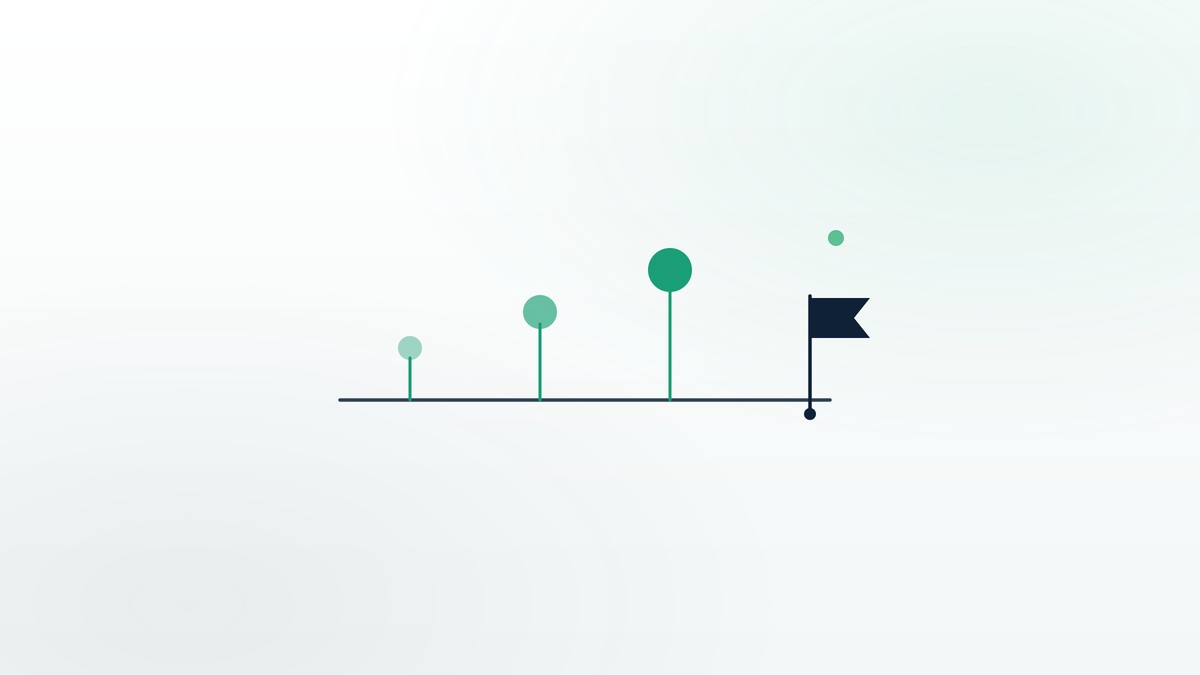
You set a reminder for the day of the deadline. It fires. You read it. And you immediately realize you can't do anything about it in time — the renewal needed 30 days' notice, the filing needed documents you don't have, the contract needed a conversation you can't have in an afternoon. The reminder worked perfectly. It just arrived too late to matter.
This is the quiet failure of single reminders. A deadline isn't a single moment — it's a runway. And a reminder that lands at the end of the runway isn't a reminder. It's a notification of something you've already missed.
Why a single alert almost always fails
The day a deadline is due is rarely the day the work needs to start.
Real obligations have lead time baked in. Cancelling a contract may require 60 days' written notice. Renewing insurance means gathering quotes. A compliance filing means pulling data and collecting signatures. By the time a same-day reminder fires, the window to act has usually already closed.
One alert is also one point of failure. If it arrives on a busy day, during a vacation, or in a crowded inbox, it gets dismissed or missed — and there's no second chance behind it.
And a lone reminder carries no sense of urgency curve. It can't tell you "there's still time to plan" versus "this is your last chance." It's the same flat ping whether you have a month or a day.
The fix: layered reminders on a cadence
The answer isn't a louder reminder. It's several, spaced to match how work actually happens. A simple, reliable pattern is 30 days, 7 days, and 1 day before the deadline.
- 30 days out — time to plan. The early alert is for the work that can't be rushed: giving notice, gathering quotes, starting a filing, scheduling the conversation. This is the reminder that actually prevents misses, because it arrives while you can still act.
- 7 days out — time to act. The mid alert confirms the plan is moving and catches anything that stalled. Enough runway left to fix a problem, not enough to keep ignoring it.
- 1 day out — last call. The final alert is the safety net: the confirmation that it's handled, or the unmistakable signal that it's now or never.
Three layers turn a single fragile ping into a system. Miss the first, the second catches you. Miss the second, the third is the backstop.
Making the cadence work in practice
A cadence only helps if it's consistent and owned. A few principles keep it reliable:
- Anchor the reminder to the action date, not just the due date. If something needs 30 days' notice, the "1 day" reminder should count down to the notice deadline — the real deadline — not the paper expiration.
- Give every deadline an owner. A cadence with no owner just means three people ignore the same alert. One accountable person per date makes the reminders land.
- Send alerts where people actually look — a shared inbox or channel, not a single calendar only one person sees.
- Adjust the spacing to the stakes. High-lead-time obligations might warrant a 60-day first alert. Low-stakes ones might only need 7 and 1. The pattern matters more than the exact numbers.
A cadence beats a heroic memory
The teams that never miss deadlines aren't the ones with the best memories — they're the ones who stopped relying on memory at all. A consistent cadence turns "I hope someone remembers" into a process that runs whether anyone is thinking about it or not. That's the whole point: the system carries the deadline so a person doesn't have to.
Stop finding out too late
Almost every missed deadline shares the same root cause: the reminder that would have prevented it either never existed or arrived after the window to act had closed. A single same-day alert can't fix that. A layered cadence can.
That's the model Reminders for Teams is built on — proactive alerts at 30, 7, and 1 day before every due date, each tied to a clear owner, so a deadline is something you plan for rather than something you're informed about too late. Every renewal, contract, and filing gets the same safety net in one shared dashboard through renewal management.
Give your deadlines a runway, not just a finish line. Start a free trial and set it up in minutes.